
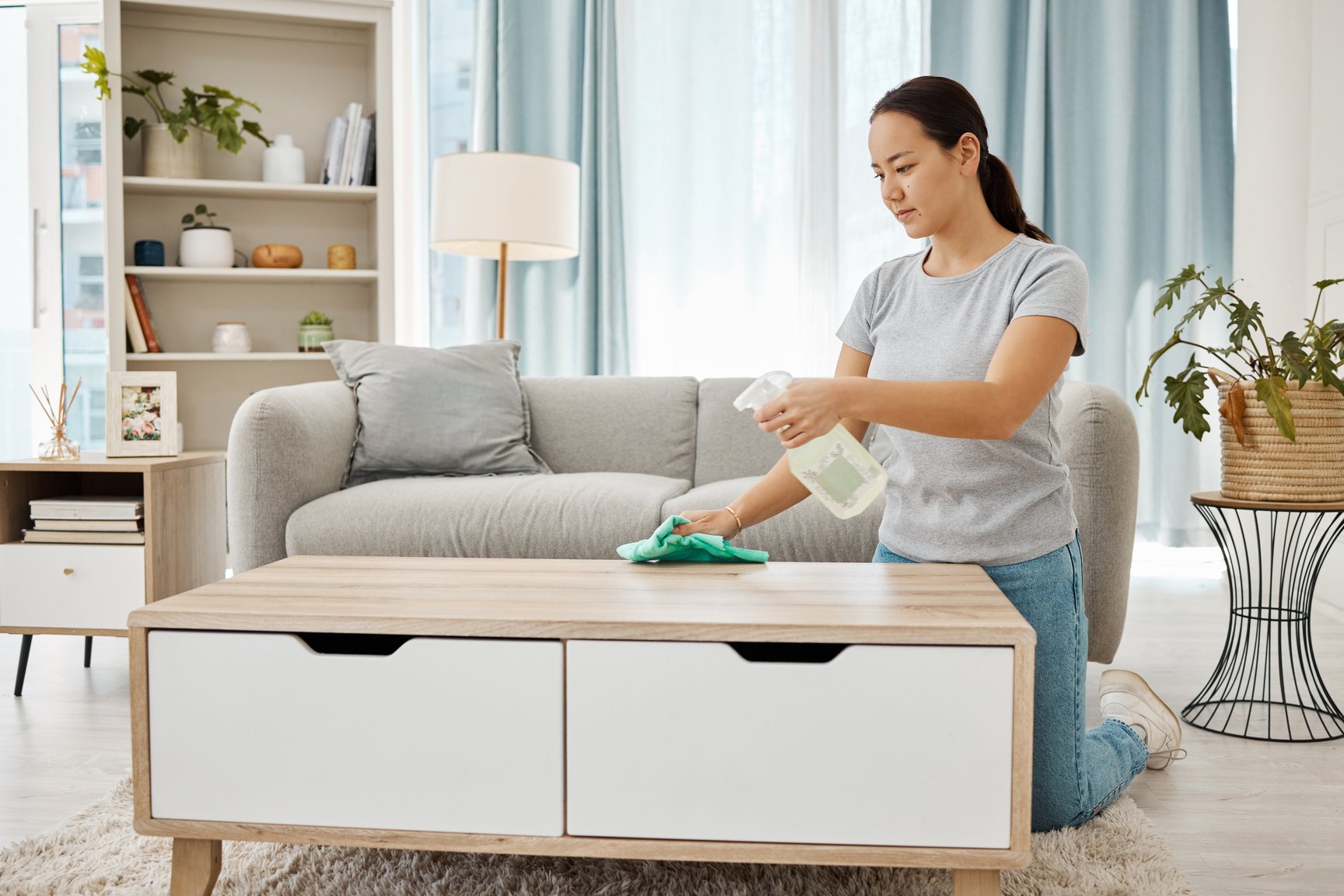
General liability insurance for a house cleaning business pays for injury to clients and other people who are not on your crew, and for damage to property that belongs to someone else, when your work causes it. It also pays to defend you against the claim, including one that turns out to have nothing behind it.
Your crew works inside homes you do not control, around belongings you did not buy, sometimes with nobody else in the house. A guest who slips on a floor you just mopped, a vase that leaves a shelf as a duster passes, a bucket that leaks into the unit below: those are the claims this policy is bought for, and the reason a client, a host or a property manager asks to see it before handing over a key.
What general liability covers for a cleaning business, and what it leaves out
As standard commercial general liability forms read, the policy has separate working parts. The first pays what you become legally obligated to pay because of bodily injury or property damage caused by an accident, and gives the insurer the duty to defend you. The second answers a shorter list of offenses, such as a statement that damages someone’s reputation. The third, where it is included, pays reasonable medical bills for a person hurt because of your operations without anyone having to prove fault. The Small Business Administration describes general liability the same way, as protection against loss from bodily injury, property damage, medical expenses, libel, slander and the cost of defending a lawsuit. Insurers file their own versions, so your policy’s wording, not this page, decides a real claim.
For a cleaning business, that generally reaches:
- a client, a family member, a guest or a delivery driver hurt because of the work your crew did in the home;
- damage to the house and its contents around the job, from a cracked mirror to a stained ceiling;
- a problem that surfaces after the crew has left, traced back to the visit;
- the cost of a lawyer, even when the claim is wrong.
It hands these to other policies:
- a member of your own crew hurt on the job, which belongs to workers’ compensation;
- your own vacuums, machines and supplies, which belong on property coverage;
- the car or van that carries the crew, which belongs on commercial auto;
- a claim larger than the liability limit, which an umbrella policy can sit above.
A hub-and-spoke diagram with general liability at the center. General liability answers for injury to clients, their families, guests and anyone else who is not on your crew, and for damage to property that belongs to someone else. From the hub, an injury to a member of your own crew is handed to workers’ compensation; the vacuums, machines and supplies you own are handed to property coverage; the car or van that carries them is handed to commercial auto; and a claim larger than the liability limit is handed to an umbrella that sits above. Your own policy wording decides any real claim. No figures are shown.
A fall in a client’s home
A cleaner’s workplace changes several times a day, and none of it was laid out with the crew in mind. A freshly mopped kitchen, a stair runner that shifts under a vacuum, a hose run across a hallway, a bucket set down by a doorway: each puts a hazard in the path of someone who lives there. The people who walk through it are the ones the policy is written for: a homeowner coming back early, a child, an older relative, a guest arriving at a rental before the crew has finished.
When one of them falls, the claim is bodily injury, and general liability is built for it. What helps when the letter arrives is evidence that the crew took care: a wet-floor sign that goes down with the mop, cords kept to the wall, a quick note in the job record of where people were in the house and what was said. Medical payments, where the policy includes it, can pay a first doctor visit without an argument over fault, which can keep a small injury from turning into a lawsuit.
A side-by-side comparison. The left column holds damage to a client’s home around the work: a lamp knocked from a side table, water from a bucket that soaks through to the ceiling below, a door frame gouged by a vacuum. That is the plainest property damage a general liability policy is written for. The right column holds damage to the very thing being cleaned or held: a stone counter etched by the wrong product, a rug discolored by a spot treatment, a key that goes missing from the crew’s keyring. Exclusions for property in your care, for the part of the property you were working on, and for the cost of rekeying can each reach those, so how a policy treats them is read before it is bought. Your own policy wording decides any real claim. No figures are shown.
When the damage is to the thing you were cleaning
Property damage on a cleaning job falls on either side of a line, and a policy can treat each side differently. Damage around the job, such as a lamp knocked over while dusting a table, water from a bucket that soaks into a ceiling below, a door frame chipped by a machine, is the plainest property damage claim there is. Damage to the job itself is harder: the stone counter you were cleaning, the hardwood you were polishing, the rug you were spot-treating.
Standard forms carry exclusions for property in the insured’s care, custody or control, and for the particular part of real property you were working on when the damage happened. How those exclusions apply to a house cleaner depends on the wording and on the facts. A client’s marble etched by an acidic cleaner, a finish dulled by the wrong polish or a delicate fabric bleached by a spot treatment can land right on that line. Some programs written for cleaning businesses change or narrow those exclusions by endorsement, and that is one of the first pages we read on a cleaning policy.
The practical defenses are a product list matched to the surfaces in each home, a test spot before any new product touches a finish, and notes on the client’s instructions. The EPA’s Safer Choice program lists all-purpose, floor and tub and tile cleaners certified against its ingredient standard, which is one place to start when a client asks what you bring into the house.
Lost keys, door codes and lockouts
A recurring client trusts the crew with a key, a garage code or a lockbox combination, and a turnover business may hold access to a whole building’s worth of units at once. When a key goes missing, the cost that follows is rekeying the locks or replacing an access system, and that is a cost the client will expect you to cover.
A lost key is not physical damage to anyone’s property on its face, so a general liability policy may not pay to change the locks unless it carries a lock-and-key endorsement. Some cleaning programs include one; others offer it as an addition. A bond is a different thing again: it answers a client’s loss if someone on your crew takes something, which general liability does not. Keep keys tagged with a code rather than an address, log who holds which key, and ask us which of these your policy actually includes.
Problems that show up after the crew leaves
Some claims arrive after the job is finished. A floor left with a slick residue that a client slips on that evening, a product left under a sink where a child finds it, a window latch not closed after cleaning the sill: the injury happens once the crew is gone, but it traces back to the work.
Standard forms treat injury and damage arising from your completed work under a part of the policy called products and completed operations, with its own aggregate limit. For a cleaning business this is the part that answers a claim made after the visit, and it is worth knowing that your policy includes it rather than assuming. A short walk-through before the crew leaves, with the client’s products back where they belong and every floor dry, is the habit that keeps this part of the policy quiet.
Employees, subcontractors and whom the policy follows
General liability covers the business and the people working for it while they do its work, so a claim caused by a cleaner on your payroll is your claim. The picture changes when you send people you pay as independent contractors. A policy may cover your liability for their work while excluding them as insureds, or it may require that every subcontractor carry a policy of their own and send you a certificate before they start.
That requirement matters. A claim caused by an uninsured subcontractor can come back to your policy, and an insurer that audits your books may charge for subcontractors who could not show coverage. Whether someone is an employee or a contractor is a question of how the work is controlled, not of the paperwork, and the answer also decides what workers’ compensation owes. Collect a current certificate from anyone you subcontract to, and tell us how your crew is paid when we quote.
Certificates and additional insureds for hosts and property managers
A property manager, a building, a short-term rental host or a homeowner’s association may ask for more than a certificate. The request is to be named as an additional insured, so that your policy responds when a claim arising from your work is made against them as well as against you. The contract or the onboarding packet says exactly what is wanted, sometimes down to the wording of the endorsement and whether your policy must answer before theirs.
Send us that page before you sign. Some policies extend additional insured status automatically to anyone you have agreed in writing to cover; others need a named endorsement for each client. A certificate only describes the policy, and it cannot add what the policy does not already carry. When a contract asks for more liability than the primary policy holds, the difference can come from an umbrella that sits above general liability, auto and employer’s liability.
How the policy reads for each kind of cleaning business
House cleaning and maid service
Recurring visits to the same homes build trust and build exposure together: keys held for months, pets and children in the house, heirlooms dusted every week. The claims to plan for are falls and breakage, and the endorsements to look for are the ones touching property in your care and lost keys.
Airbnb and turnover cleaning
Turnover work happens on a deadline between guests, with linens, restocking and sometimes a hot tub or a balcony in the scope. The host will ask for a certificate and may ask to be an additional insured. A guest hurt in a unit you just turned over can name both of you, so describe the work exactly on the application.
Deep cleaning and move-out cleaning
A deep clean reaches the surfaces a weekly visit skips: ovens, grout, baseboards, behind appliances. That means stronger products, appliances moved away from walls and finishes that have not been tested. Damage to the surface being worked on is the line to read closely here.
Post-construction cleanup
A post-construction crew works in a house that is not finished, around trades that are still on site, with construction dust, debris and ladders. The general contractor may set the insurance terms, including additional insured wording and proof that your policy answers first. Tell us about this work separately, because an insurer may look at it differently from residential cleaning.
Limits and how they are set
A general liability policy carries a limit for each occurrence, an aggregate for the policy period and a separate aggregate for products and completed operations; medical payments, where included, has a smaller limit of its own per person. We do not publish figures for them here. The right limits depend on what your client contracts and property managers require, on whether you clean high-value homes, and on how much a single bad day could put at stake. We start from the highest requirement in your contracts and talk through whether more is worth carrying.
How we quote general liability for a cleaning business
We are an independent agency, and appetite for cleaning businesses differs from one insurance company to the next and from state to state. We ask what kinds of cleaning you do, how your crew is paid, whether you hold keys and codes, whether you do turnover or post-construction work, and what your clients’ contracts require. Then we send the account to the insurance companies we work with whose appetite fits it. Before you see a quote, we read the parts of each policy that decide cleaning claims: property in your care, damage to the work itself, lock-and-key cover, subcontractor conditions and the additional insured wording your clients need. You can see how this policy fits with the rest in our house cleaning insurance program.