
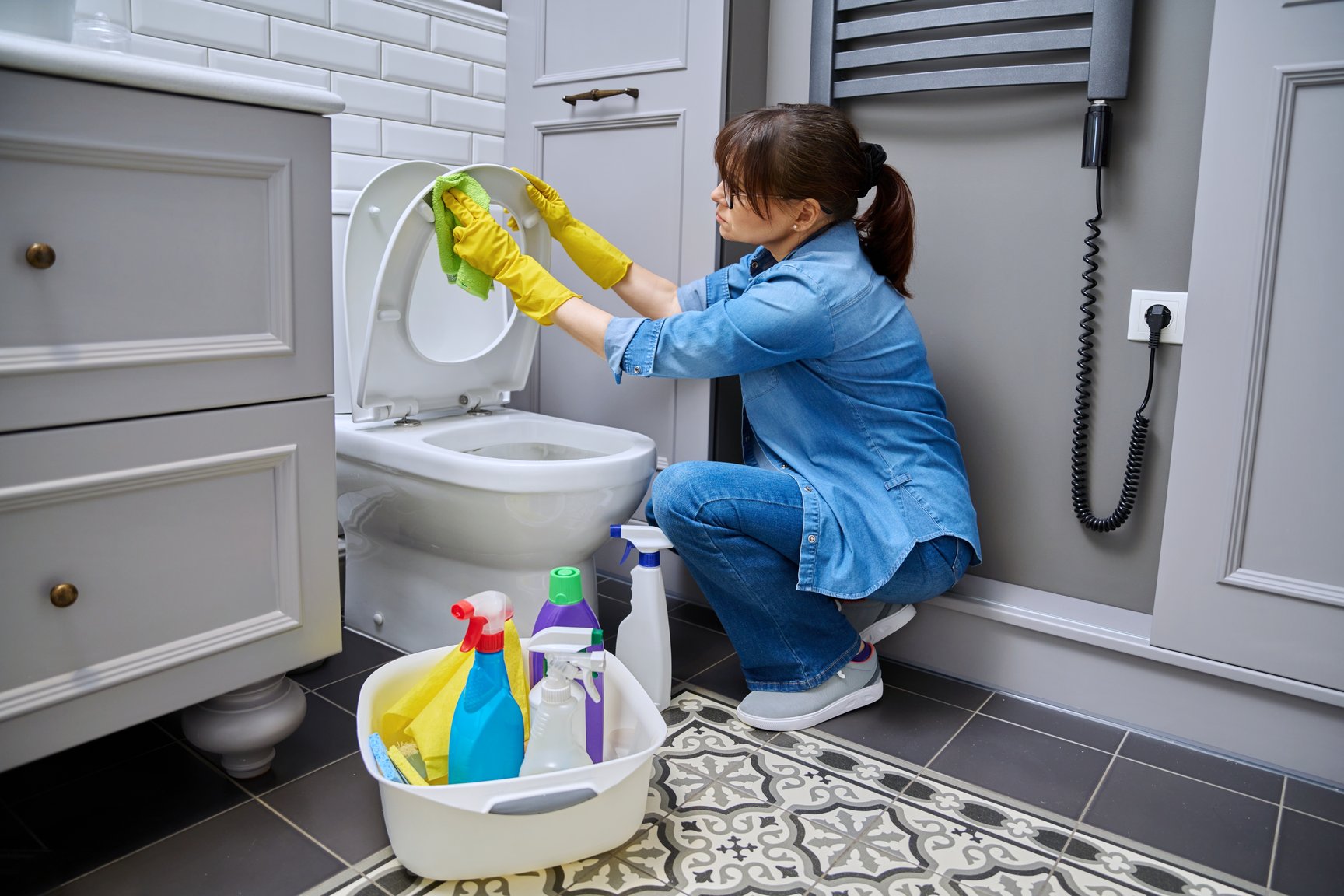
Property insurance pays to repair or replace the things your cleaning business owns when a covered event damages or destroys them. For a house cleaning business that means the vacuums, floor machines, steam cleaners, linens and supplies your crew uses every day, and the space where you keep them.
A cleaning business looks light on assets until you picture replacing all of it at once. A crew that loses its machines to a fire or a break-in cannot clean tomorrow’s jobs, and the clients on the schedule do not wait. Property coverage exists so a loss of gear becomes a claim you can file instead of a bill that stops the business. It does not cover a client’s belongings, your vehicle, or an injured person, and the sections below show where those go instead.
What property insurance covers for a cleaning business, and what it leaves out
The U.S. Small Business Administration describes commercial property insurance this way: “This coverage protects your business against loss and damage to company property due to a wide variety of events. These include fire, smoke, wind and hailstorms, civil disobedience and vandalism.” For a cleaning business, “company property” is the practical list of what you would have to buy again. Insurers file their own wording, so the exact events and exclusions differ by policy.
Property coverage is generally built around these items:
- Business personal property: vacuums, floor machines, steam cleaners, ladders, caddies and tools.
- Linens, uniforms, chemicals and refill supplies kept in stock.
- Office items such as a laptop, printer, phone and files, if you run scheduling from a desk.
- The building, if your business owns it, and the contents inside.
- Gear written for travel, when the policy is arranged to follow your equipment between jobs.
What it leaves out matters just as much, because a claim lands on the wrong policy when the line is blurred:
- A client’s belongings or home that your crew damages is a general liability question, not property.
- The vehicle itself, and what happens in a collision, belongs to commercial auto.
- A crew member hurt on the job is a workers’ compensation matter.
- Wear, breakdown from age, and losses the policy names as excluded, such as certain kinds of water damage, depend on the form.
The figure stacks the kinds of business property a cleaning crew lists, starting with the building when the business owns it, then the machines, the hand tools, the linens and the consumable supplies. Each layer is something you would have to replace after a covered loss. Your own policy wording decides any real claim. No figures are shown.
What belongs on your list of insured gear
A property policy only responds to property it knows about, so the list you build is the foundation. Start with the machines, because they cost the greatest sum to replace: vacuums, floor machines and steam cleaners. Add the hand tools and caddies your crew carries into each home. Then count the consumables, the chemicals, refills, cloths and paper goods, which add up when you restock them all at once after a loss.
If you do turnover cleaning for hosts and property managers, add the linens, towels and amenity stock you keep on hand. Those are business property too, and a crew that launders and restocks between guests can hold a surprising amount of it. Keep receipts, photos and serial numbers where you can reach them after a loss, because a claim moves faster when you can prove what you owned.
Ask us how a policy treats items you bought for a single job, such as a rented machine, since some policies cover borrowed or rented property differently from items you own.
Working from home or from a leased space
A cleaning business can start at a kitchen table with the machines in the garage. That raises a real question about the owner’s homeowners policy. The SBA notes that “coverage that’s added to homeowner’s insurance as a rider can offer protection for a small amount of business equipment and liability coverage for third-party injuries.” That wording points to the limit of the arrangement: a rider is built for a small amount of equipment. A homeowners form may also limit or exclude business property outright, so read it before you assume your gear is protected.
If you rent a storefront, an office suite or a storage unit, the lease clause on insurance becomes the document to read. Leases generally assign the building to the landlord and the contents to you, and some require you to carry property coverage and show proof. If you pay for improvements to the space, such as shelving or a built-in laundry area, ask whether the policy treats those improvements as part of your insured property. That concept is called tenant’s improvements, and its treatment depends on the lease and the form.
If your business owns its building, the structure joins the list. Ownership brings a different set of questions about what the building is worth to rebuild, which we work through with you rather than guess at.
Gear in a vehicle, at a client’s home, and the theft question
Your crew’s equipment spends much of the week away from your address, in a trunk, in a van, or sitting inside a client’s hallway. The vehicle is a commercial auto matter. The vacuums, machines, linens and supplies riding in it are property. A policy written for equipment that travels, which the insurance trade calls inland marine, is built for that gap, and it is worth asking about when your gear leaves your address every day.
Theft from a vehicle or a job site is a loss a cleaning crew faces, and the policy wording varies a good deal. Some property forms limit theft from a parked vehicle, expect the vehicle to have been locked, or ask for signs of forced entry. Some set limits on property away from your premises. Ask these questions before you buy, not after a break-in:
- Is gear covered while it is in a vehicle, and does the policy care whether the vehicle was locked or attended?
- Is gear covered at a client’s home or a rental turnover, away from your premises?
- Does an overnight stay in a vehicle change the answer?
- Is a stolen tool trailer treated differently from gear inside a van?
The figure walks a property claim in order: the loss happens, you report it, you document the damaged gear against your list, the insurer measures the loss against the policy’s valuation terms, and payment follows. Your own policy wording decides any real claim. No figures are shown.
How a property loss is valued and paid
A pair of ideas decide how much a property claim actually pays, and both are worth understanding before a loss. Replacement cost pays to replace damaged property with new property of like kind, without subtracting for age. Actual cash value pays what the property was worth at the time of loss, which accounts for wear and age. An aging steam cleaner that has seen hard use could be treated very differently under each. Which one applies is a choice in the policy, and it is a place where a lighter quote can hide a real difference.
A property policy may also include business income coverage, sometimes called business interruption. As a concept, it is meant to replace income you lose while a covered loss keeps you from working, such as a fire at your storage space. Whether a form includes it, how long it pays, and what counts as a covered cause all depend on the wording, and we do not promise it for any specific policy. Ask whether it is offered and what it requires.
After a loss, the usual path is to report it, document what was damaged against the list you made, and let the insurer measure the loss against the policy’s valuation terms. A fresh inventory is the strongest thing you can have in hand when that conversation starts.
How property reads for different kinds of cleaning business
House cleaning and maid service
The core exposure is the kit that travels with the crew. A home-based owner should focus on how the policy treats gear stored at home and gear in the vehicle, since both locations carry their own wording.
Airbnb and turnover cleaning
Turnover work adds linens, towels and restock supplies for hosts and property managers, moved between a stock room and several rentals. The listing of that stock, and where it sits during the week, matters more here than for a plain house cleaning route.
Apartment, deep and move-out cleaning
These jobs lean on heavier machines and larger chemical supplies. Ask whether the policy handles higher-value equipment separately and whether chemical stock stored at a base is protected.
Post-construction cleanup
Post-construction crews bring industrial-strength vacuums, scrapers and ladders into unfinished spaces. That gear is exposed to theft on a job site that is not secured the way a finished home is, so ask how the policy treats property left at a site overnight.
How limits and structure work, in words
A property policy sets a limit for the covered items, a limit for particular categories, and what you pay yourself before the policy responds, the deductible. We describe them here rather than price them, because the right structure comes from your list of gear and not from a rule of thumb. Some forms set a total for all your business personal property, while others schedule high-value items individually so each is named. Equipment away from your premises, and property stored outside, may carry limits of their own.
The shape matters more than a headline number. A high total limit with a low sub-limit for gear in a vehicle can leave your exposed property under-covered, so read how the policy divides its limit. If a crew grows or you buy a new machine, the list should grow with it, since a policy built for last year’s equipment may not fit this year’s. Liability to others, including a client whose property is damaged, sits in a separate policy, and an umbrella sits above liability, not above your own gear.
How we quote property for a cleaning business
Wexford is an independent agency, so we take your gear list, your space and your vehicles to the insurance companies we work with and compare what comes back on covered property, valuation and exclusions, not only on the number at the bottom. We ask about where equipment is kept, whether it travels, whether you rent or own your space, and what a replacement would cost you. Property is a part of a program that also carries liability, workers’ compensation and auto, which the house cleaning insurance page lays out as a whole.
Send what you have, even if it is a rough list from your phone. We will tell you what we see, point out any gaps, and answer your questions plainly.